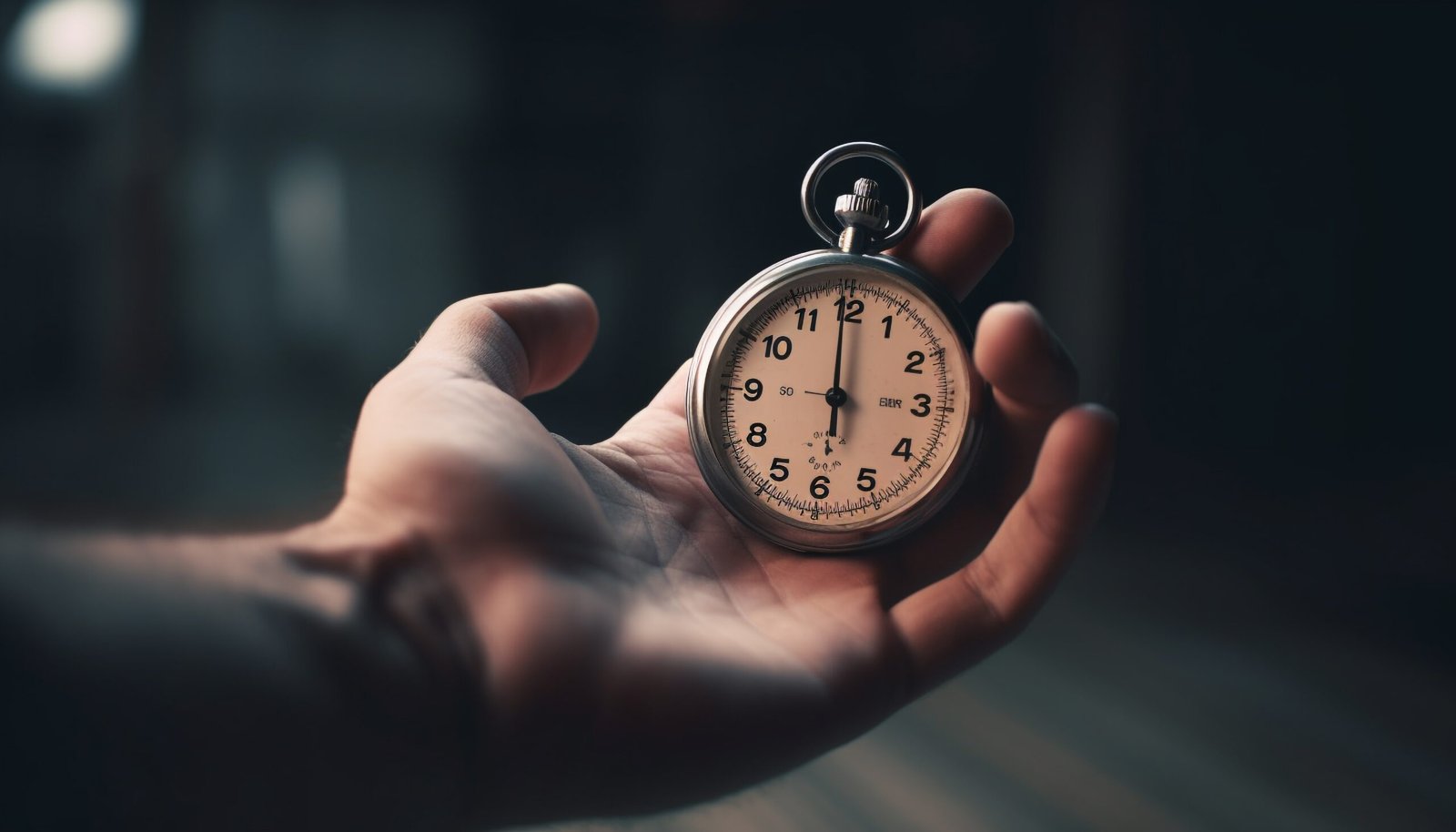
In the title, I used the apostrophe for the word “time.” We put an apostrophe to emphasize the particular thing, to separate it out from others and embellish it. It means the apostrophized word, thing, or phenomenon will play the central role in the conversation or the discussion. Our focus will sharpen towards the embellished figure. But, at the same time, the very embellishment blurs the others that rest outside of the apostrophized thing – ‘What’, ‘is’, ‘the’, ‘now’ – and as well the structure of the sentence itself; here, it is in the form of a question (?). However, the biggest problem is substantiating the concept or word that rests in the apostrophe, which creates a unifying force, cutting out the potentials of plurality that delve into the concept or the word. This suffering is inevitable in order to enter into the kingdom of the apostrophe.
The fellow neighbours that live beside the “Time” in ‘What is the “Time” Now?’ must be called upon in order to apprehend the structure of our experience. We say ‘What is this’, or ‘What is that’, or ‘What are you saying’ in the belief that the thing that is being asked about is not out of reach. The “What” presupposes what is in my or in our disposal. The string of words “What is the”, pointing towards “Time”, signifies that time is in our disposal. It is calculable, manipulatable, and, more importantly, it can be conquered. It is in the service of me; it doesn’t have its own fate. Rather, it functions for me, for us, and around us. Now, the word ‘now’ implies the form of the experience of time within the experience of time. Because ‘What is the Time?’ itself is enough, the ‘now’ is actually unnecessary in this question, but this ‘now’ denotes the time that is not in our disposal, that survives without us, without meeting our consciousness. Thus, within the primordial experience of time, we manufacture time for us as a determinate object, and it turns into the mode of purposiveness.
What is the “Time” now? – in this question, we discard the primordial experience of time, plunging into time as a determinate object, which is in the service of us, for our projects, our initiatives, and goals – it is for the I’s, by the I’s, and of the I’s. But becoming trapped in our own creation is not so far away, which resembles the Camus quotation, to concretely put: “A man wants to earn money in order to be happy, and his whole effort and the best of life are devoted to the earning of that money. Happiness is forgotten; the means are taken for the end.” Here, in the process of earning money as a base to acquire happiness, the inseparable unity between money and happiness is consolidated. Likewise, primordial time and the time we developed become an inseparable unity, where the ‘now’ is undermined. Time and identity are intrinsically linked and feed off each other. The important question is, who controls the time? In whose disposal is our time? Who determines the determinate experience of time? Who is holding the lever?
In Sanskrit, the word ‘Kala’ has two meanings – ‘time’ and ‘black’. In this sense, time is ‘other’, an ‘unknown’, even a ‘death’. Time as a horizon of the future brings something that is unexpected, unknowable, or completely different. But the time we are talking about is already given, scheduled, calculated, and visible. The time as black or dark is non-sensical in our experience, since it is visible, too visible, hypervisible – so it can be used up. Use and being used? – life is reduced to means and ends, a thing of utility.
Today, time is preloaded with tasks, tied to the overarching production. This experience of time leads us to eating it up instead of opening up new things or experiences. The time that is outside of work, a leisure time, also turns out to be the dull immanence of consumption. The world of consumption targets, elicits, and sustains personal interests and desires, leading to the world of privatization. It discloses the time of the self that is exhausted by fragmentary and short-lived pleasures. Doomscrolling is also the result of our drive to chase short-term pleasures rather than long-term ones, which demand commitment and an embrace of the “unknown”. It rejects the time of the other, the time of surprises, and time as uncertainty as we are clogged up in the privatized self, which can be disrupted by the time that anchors on the openness to the arrival of novelty. Thus, time becomes too visible, the self becomes too visible, giving us the illusion of omnipotence, but in reality, it is the development of the domestication of life.
In one mythological story, Naradhar, a sage, asked Vishnu to explain ‘maya’. But, before the explanation, Vishnu asked him to fetch water since he was thirsty. As Naradhar approached the bank of the river, he saw a beautiful lady who walked with a pitcher of water in her hand. Instantly, Naradhar was attracted to her, married her, raised a family, and lived happily. But, one day, a flood came and washed away his family and possessions, except him. While he cried out in despair, a hand of Vishnu touched his shoulder. Suddenly, he woke up and realized that he had not yet moved away. Currently, in our experience of time, it seems there are a lot of things happening, but in reality, nothing has moved a needle. However, do we allow the divine to touch us and make us realize it?
In the discussion with my friend, she said time is the prime ruler; even a God is subject to it. In a nutshell, her point is that time can create, control, and destroy every trace of existence. While my point is that, since God is immortal, he can’t be destroyed by time, which is a mortal phenomenon; time itself is the manifestation of God. However, both of our points meet each other and form the core. We are being controlled, maintained, and sustained by time that is manifested and formed by the higher order of being. Who is that higher order of being? After all, the same being will turn out to be the prisoner of the time he created.